I see a lot of people having problems with batteries (leisure and starter) going flat during winter motorhome storage, and some are baffled because they have solar panels to maintain them. The thing is, solar panels only respond to sunlight and their output rating is based on mid-summer sunshine which is directly overhead.
During the winter months, there are several issues that affect the output. First, the hours of daylight available are drastically reduced; there are as little as seven hours of light a day at winter solstice in the UK. Add to that, the angle of the sun’s rays hitting the motorhome solar panels is greatly reduced and the output drops off massively.
As an example, I have 275W nominally of solar on our motorhome, yet in late October on a slightly dull day I was getting less than 1 amp at 10am. My solar controller will only switch to starter-battery charging if the leisures are above 80% and starter below 12.5 volts. Less than 1 amp for seven hours a day won’t really keep up.
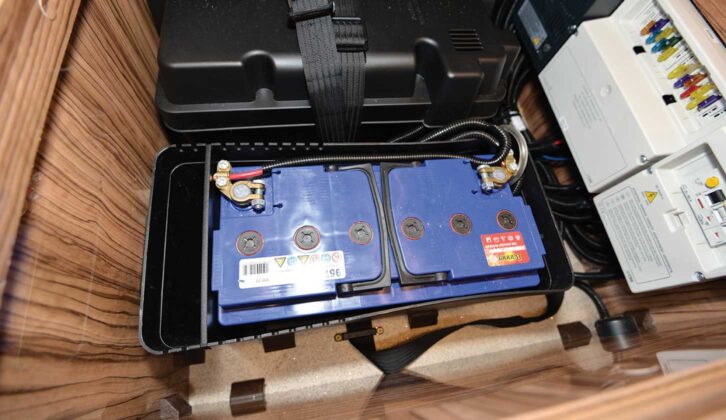
Many modern vehicles have a parasitic load on the starter battery, often from the ECU, alarm or tracker. This load is not usually very much, 20-30 milliamps or so, but over a few weeks it can drain a battery to a dangerous level. If the solar charging system is giving little to no charge, then the net effect is a flat battery after a week or two.
Many factory-fitted solar set-ups are only around 100W nominal and are often fitted with basic pulse width mode (PWM) regulators so will struggle to produce anything meaningful in winter, especially on dull days.
There are things you can do to avoid flat motorhome batteries, though. First and most obvious is to connect the motorhome to EHU for 24 hours once a week to top up the batteries. Obviously to do this means having EHU available at the motorhome’s location, but few storage locations offer it.
You could remove the leisure batteries and keep them in a shed or garage at home with a maintenance charge being applied periodically, but this will not help the starter battery. You could, I suppose, remove the starter battery as well, but that would leave the vehicle with no alarm or tracker and can make some modern vehicles difficult to lock. Some motorhomes also offer poor access to the starter battery, particularly A-class models with the battery in the engine bay.
The best option is to use the vehicle at least once a month, if not more frequently; not necessarily for a camping trip, although that is a great option if you can do it. Just go for a drive of at least 10 miles – that will help to keep batteries charged and everything working smoothly.
Take a look at how Motorhome Matt uses the Rule of Three to transform his touring experience.
Lead image: Getty Images
Future Publishing Limited, the publisher of Practical Motorhome, provides the information in this article in good faith and makes no representation as to its completeness or accuracy. Individuals carrying out the instructions do so at their own risk and must exercise their independent judgement in determining the appropriateness of the advice to their circumstances. Individuals should take appropriate safety precautions and be aware of the risk of electrocution when dealing with electrical products. To the fullest extent permitted by law, neither Future nor its employees or agents shall have any liability in connection with the use of this information. Double check any warranty is not affected before proceeding.
If you’ve enjoyed reading this article, why not get the latest news, reviews and features delivered direct to your door or inbox every month. Take advantage of our brilliant Practical Motorhome magazine SUBSCRIBERS’ OFFER and SIGN UP TO OUR NEWSLETTER for regular weekly updates on all things motorhome related.